
Indian stock markets are set to be influenced by developments in US-Iran negotiations, crude oil prices, and foreign investor activity in the upcoming holiday-shortened week, according to market analysts.

The rupee witnessed a volatile trading session and settled for the day on a slightly lower note, down 1 paisa at 90.66 against the US dollar on Monday, as traders assessed the details of the India-US interim trade framework.

The Indian rupee plummeted to an all-time low of 95.80 against the US dollar, settling at 95.66, driven by elevated crude oil prices and escalating geopolitical tensions in West Asia, despite potential RBI intervention and import curbs on gold.

Foreign Portfolio Investors (FPIs) withdrew nearly Rs 33,000 crore from Indian equities in May, bringing the total outflow for 2026 to Rs 2.25 lakh crore, driven by weak earnings growth, rupee depreciation, and more attractive opportunities in other global markets.

Foreign Portfolio Investors (FPIs) have withdrawn Rs 27,048 crore from Indian equities so far in May, bringing the total outflows for 2026 to Rs 2.2 lakh crore, driven by global macroeconomic and geopolitical uncertainties.

The central bank is yet to consider actions such as a rate hike or mobilising dollar inflows from non-resident Indians to boost forex reserves as it cannot afford to continue with them for long when the rupee's internationalisation tops its agenda, explains Tamal Bandyopadhyay.

US authorities have shut down an India-based call centre operation that allegedly defrauded hundreds of elderly Americans of millions of dollars through tech support scams, following a years-long investigation.

Former IPL chairman Lalit Modi has claimed that several Indian cricket stars initially dismissed T20 cricket as a "stupid game" and were unwilling to play the inaugural 2007 T20 World Cup, highlighting how dramatically perceptions of the format have changed since then.

Indian benchmark indices Sensex and Nifty experienced a significant slump in early trade, mirroring a sharp decline in global equities and a fresh spike in crude oil prices, exacerbated by simmering tensions in West Asia and a global unwinding of the AI-led rally. Track how sensex, Nifty fared on June 8.

Reserve Bank Governor Sanjay Malhotra announced that India's foreign exchange reserves stand at a healthy $682.3 billion as of May 29, 2026, providing approximately 11 months of import cover and strong protection against external shocks.
The Reserve Bank of India (RBI) has kept its key lending rate, the repo rate, unchanged at 5.25 per cent for the second consecutive time, citing concerns over rising energy prices, supply disruptions from the West Asia crisis, and potential inflationary pressures.

The asymmetry in deposit and credit growth is the biggest challenge before the Indian banking industry. For every 100 deposit that a bank mobilises, it needs to keep 3 with the banking regulator in the form of cash reserve ratio on which it doesn't earn any interest. Another 18 is used for buying government bonds (statutory liquidity ratio). This means, a bank is left with 79 for giving credit. Add to this, its capital which can be used for giving loans. Most banks are facing a fund crunch. They need to find ways to attract deposits if they want to sustain credit growth, explains Tamal Bandyopadhyay.

Former IPL commissioner Lalit Modi has sensationally revealed that life-threatening intimidation from underworld don Dawood Ibrahim and his crime syndicate was the primary reason for his permanent retirement from cricket administration. Modi detailed how his unyielding stance against match-fixing and refusal to cooperate with the D-Company's multi-billion-dollar betting empire led to direct threats, including a phone call from Dawood and subsequent assassination attempts.

Basketball fans greeted US President Donald Trump with a chorus of loud boos on Monday, as the Republican became the first sitting US president to attend the NBA Finals.

The Indian stock market mythos of 36 years is wrapped in a diaphanous negligee, lashed together by a delicate, etheric sash of 1.6 bull markets. To make money from here on will require a ground invasion, trench by trench, rather than carpet bombing. Way more difficult, points out Shankar Sharma.

The US Treasury Department is exploring the possibility of featuring Donald Trump's portrait on a new $250 note, pending congressional approval to amend the law that prohibits living individuals from being depicted on US currency.

Airlines are cutting not only international services but also domestic flights, especially on routes projected to remain unprofitable in the coming weeks due to weak demand and high fares.

'The situation globally is quite challenging, but we have the confidence and courage of conviction that we will come out winners even in this challenging time.'

'Once the market decides it wants to go up, it goes up -- no amount of bad news can really hold it back.'

First responders and eyewitnesses vividly recall the horrific Ahmedabad Air India crash a year later, describing an inferno exceeding 1,000 degrees Celsius that melted boots and aircraft parts, and the heart-wrenching retrieval of a pregnant woman's charred body amidst the chaos.

Larsen & Toubro (L&T) is significantly investing in automation, robotics, and technology-led solutions to scale up its construction activities, as increasing traditional manpower is no longer a viable growth option, according to CFO R Shankar Raman.

Compared with a year ago, the effective cost of studying abroad for Indian students has increased by roughly 10%-12% due to currency depreciation and rising living costs.

'You set up your SIPs and you do not touch them. Not during COVID, not during a war scare, not when your neighbour tells you the market is finished. You let the noise pass over you.' 'The beauty of this approach is that it does not require courage or conviction in the moment. It just requires inertia -- keep the SIP running and do not look at your portfolio too often.'
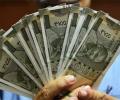
The rupee weakened to a record low against the US dollar due to Gulf tensions, rising oil prices, and foreign capital outflows.

The Reserve Bank of India (RBI) is set to introduce polymer banknotes to address the rising demand for currency, improve durability, and reduce production costs, with a pilot project expected soon.

Former IPL Commissioner Lalit Modi, who claims that there is no wrongdoing by him in the legal cases faced by him in India, has said that he was born with "a diamond spoon", has a kingsize lifestyle, travels everywhere and that "Rs 10-12 crore" may not last with him a week.
The rupee recovered to 95.18 against the US dollar after hitting an all-time intra-day low of 95.44. The recovery was supported by possible RBI intervention amid renewed Gulf tensions and rising crude oil prices.

A delegation of Indian startup founders and leaders visited the UK to explore collaborations in artificial intelligence and technology, aiming to strengthen the India-UK innovation corridor.

Fintech platform Decentro has received final approval for a Payment Service Provider (PSP) licence from the IFSCA at GIFT City, enhancing its cross-border payment capabilities.

Why would a country that requires close to $90 billion in net foreign capital annually to create jobs, build productive capacity, and sustain rapid growth permit $30 billion of capital to flow abroad, thereby contributing to pressure on the rupee? asks Debashis Basu.
TCS has secured a multi-year deal with Swedish bearings manufacturer SKF to modernise its IT infrastructure and leverage AI for industrial manufacturing.

Tensions in West Asia have dramatically escalated as Israel launched targeted military operations against Iran, triggering widespread blasts across strategic cities, following earlier Iranian projectile attacks on Israel.
Indian stock markets concluded Tuesday's trading session lower, reversing intraday gains due to late-session selling in blue-chip stocks like HDFC Bank and Reliance Industries. The decline was primarily driven by the Indian rupee hitting a new record low against the US dollar and elevated global crude oil prices, compounded by geopolitical uncertainties.

India's foreign exchange reserves saw a significant increase of USD 6.295 billion, reaching USD 696.988 billion for the week ending May 8, as reported by the Reserve Bank of India.

The Indian equity market is set for an event-heavy week, with analysts pointing to the Reserve Bank of India's (RBI) interest rate decision, developments in the US-Iran situation, and crude oil prices as the primary determinants of market trends.

United States and China have agreed that "Iran can't have nuclear weapons," and that the Strait of Hormuz must be opened, according to US President Donald Trump.

Byju Raveendran, founder of the embattled edtech firm Byju's, has been sentenced to six months in jail by a Singapore court for contempt of court over alleged non-compliance with disclosure orders, a ruling he described as "procedural" and plans to appeal.

'Exploration should be made easier and companies should be given operational flexibility.'

India's foreign exchange reserves saw a significant drop of USD 7.794 billion, settling at USD 690.693 billion for the week ending May 1, as reported by the RBI, reflecting the impact of global events and central bank interventions.

Indian benchmark indices Sensex and Nifty closed marginally lower due to profit-taking, following the Reserve Bank of India's decision to keep the repo rate unchanged while lowering its growth expectations for the current fiscal year and forecasting higher inflation.
